



Risen Energy’s LSE ESG Rating Upgraded Three Consecutive Notches
Risen Energy’s LSE ESG Rating Upgraded Three Consecutive Notches
News dated July 13: The London Stock Exchange (LSE) recently released its latest ESG rating results, awarding Risen Energy a B+ rating, an upgrade from the previous year’s B grade. The LSE ESG rating hierarchy from highest to lowest is: A+ > A > A- > B+ > B > B- > C+ > C > C- > D+ > D > D-.
Over the past three years, Risen Energy’s LSE ESG ratings have trended steadily upward: B- in 2024, B in 2025, and B+ in 2026.
In peer comparison among A-share listed companies classified under the GICS Level 3 industry group of Electronic Equipment, Instruments & Components, 62 firms have obtained LSE ESG ratings. Foxconn Industrial Internet, EVE Energy and Sunwoda all hold an A rating, tying for first place.
Environmental Dimension Score
Risen Energy scored 72.80 in the environmental category. Industry top three scorers: Sunwoda (96.70), Universal Scientific Industrial (92.00), and Jinli Permanent Magnet (86.80). Bottom three scorers: Aishide (0.10), Changxin Display (1.70), and Guide Infrared (3.60).
Social Dimension Score
Risen Energy scored 73.30 in the social category. Industry top three scorers: EVE Energy (90.80), LONGi Green Energy (90.70), and Sunwoda (88.20). Bottom three scorers: Aishide (3.60); Jingjia Micro and Changxin Display tied for second-worst (4.40); Honghe Technology ranked third-worst (4.90).
Governance Dimension Score
Risen Energy scored 70.90 in the governance category. Industry top three scorers: EVE Energy (99.10), Unimicron Technology (88.30), and LONGi Green Energy (85.20). Bottom three scorers: Changxin Display (13.80), Huagong Tech (16.80), and Zhongci Electronics (17.70).
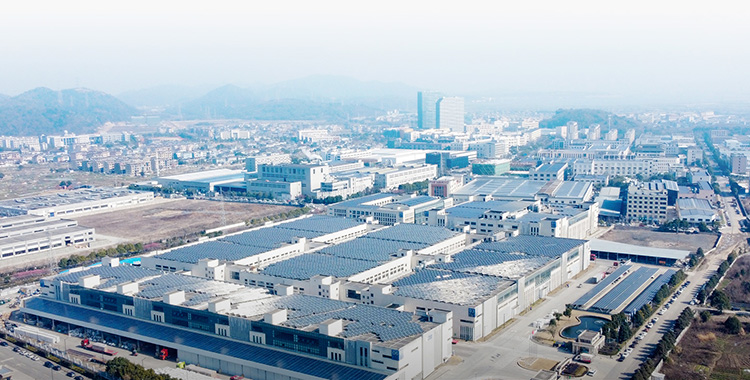
According to public information, Risen Energy Co., Ltd. is located at Tashan Industrial Park, Meilin Subdistrict, Ninghai County, Ningbo City, Zhejiang Province. It was founded on December 2, 2002, and listed on the A-share market on September 2, 2010. The company’s core businesses cover the production and sales of photovoltaic products including solar modules, EVA film, solar cells and solar systems, as well as investment, construction and operation of solar power stations. Breakdown of core operating revenue:
· Solar cells and modules: 52.21%
· Solar power station EPC and transfer: 26.68%
· Energy storage systems, lighting fixtures and auxiliary PV products: 13.85%
· Electricity revenue from PV power plants: 3.80%
· Other businesses: 3.46%
Under the Shenwan Industry Classification, Risen Energy falls under Power Equipment – PV Equipment – PV Cells & Modules. Its related concept sectors include Polysilicon, BIPV (Building Integrated Photovoltaics), Energy Internet, Rural Revitalization, etc.
As of March 31, the company had 131,800 shareholders, representing a 66.26% increase from the previous reporting period. The average number of tradable shares held per shareholder stood at 7,031, down 39.85% quarter-on-quarter. From January to March 2026, Risen Energy recorded operating revenue of RMB 2.702 billion, a year-on-year decrease of 9.65%. Net profit attributable to parent shareholders reached negative RMB 361 million, dropping 35.31% year-on-year.
Regarding dividends: Since its A-share listing, the company has distributed a total of RMB 1.243 billion in cash dividends, with cumulative cash payouts of RMB 226 million over the past three years.
LSE ESG Rating Methodology
· A+, A and A- represent the top quartile of the industry group. The plus/minus sign indicates whether the company ranks in the top/lower third of the top quartile. An A rating signifies outstanding ESG performance and high transparency in disclosing key ESG data.
· B+, B and B- represent the second quartile of the industry group. The plus/minus sign indicates whether the company ranks in the top/lower third of the second quartile. A B rating reflects solid ESG performance with disclosure transparency above the market average.
· C+, C and C- represent the third quartile of the industry group. The plus/minus sign indicates whether the company ranks in the top/lower third of the third quartile. A C rating denotes acceptable ESG performance and moderate disclosure transparency of core ESG indicators.
· D+, D and D- represent the bottom quartile of the industry group. The plus/minus sign indicates whether the company ranks in the top/lower third of the bottom quartile. A D rating means the company’s ESG performance requires significant improvement, paired with low transparency in key ESG data disclosure.